23 Jun 2026
Tracing Smart Contract Deployments and Their Effects on Automated Verification Processes in Worldwide Digital Gaming Operations
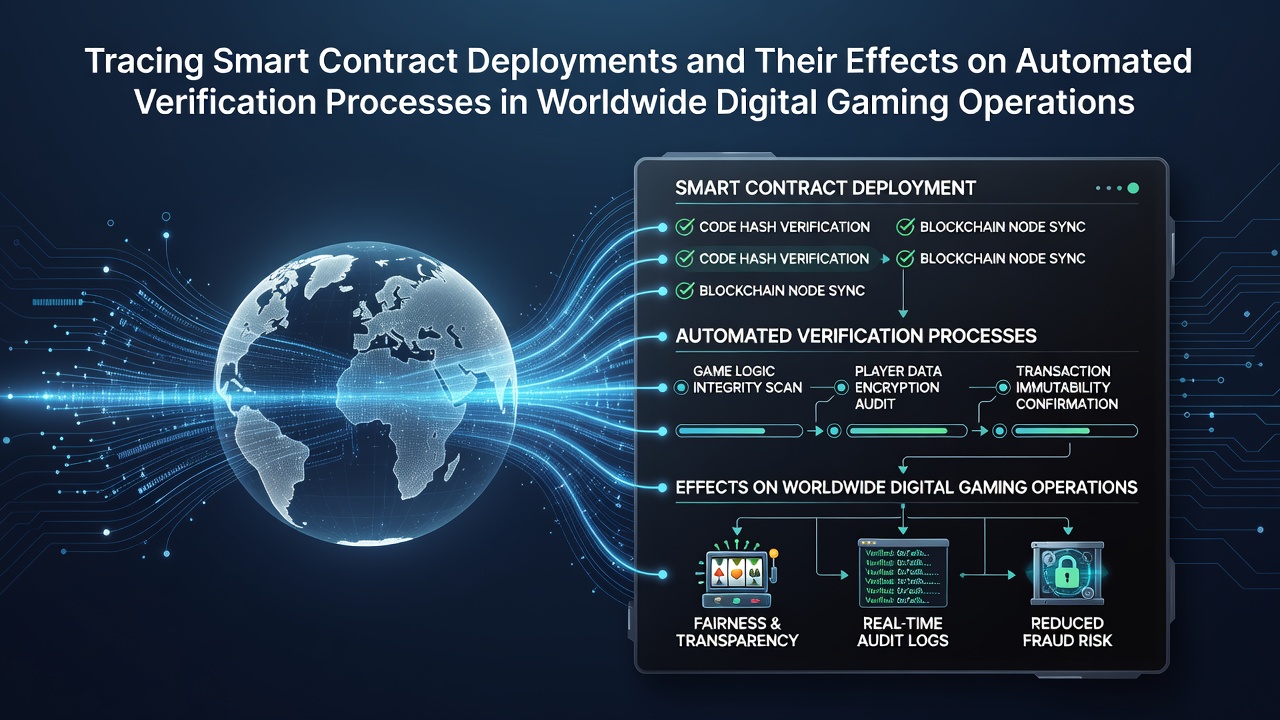
Smart contract deployments on public blockchains have reshaped how digital gaming platforms handle outcome verification across multiple jurisdictions, and developers continue to refine these systems as transaction volumes rise through mid-2026. Platforms integrate code that executes automatically once predefined conditions are met, which removes several layers of manual oversight previously required in online gaming environments.
Deployment Patterns Across Major Networks
Operators choose Ethereum, Polygon, and Solana for most gaming contracts because these networks support rapid execution and lower fees compared with older chains, while researchers tracking deployment data note that over 4,200 new gaming-related contracts appeared on these platforms between January and June 2026. Each deployment includes functions that record game states, player inputs, and random number generation seeds directly on-chain, creating immutable logs that later verification tools can query without contacting the original operator.
Integration with Random Number Oracles
Verification processes rely on external oracles that feed verifiable randomness into the contracts, and services such as Chainlink VRF have processed more than 180 million gaming requests in the twelve months ending June 2026. When a contract calls an oracle, the response becomes part of the permanent record, allowing any participant to replay the random sequence and confirm that results matched the published seed. This mechanism operates identically whether the game runs in European markets or Southeast Asian jurisdictions, which standardizes audit trails across borders.
Effects on Automated Verification Workflows
Once a contract is deployed, automated scripts scan each block for gaming transactions and compare recorded outcomes against expected probability distributions, while platforms that adopt this approach report a measurable drop in dispute resolution times. Data from the European Gaming and Betting Association shows average claim handling periods falling from 72 hours to under 9 hours when full on-chain verification is active. The same scripts also flag anomalies such as repeated seed reuse or unexpected payout clustering, triggering alerts before regulators receive formal complaints.
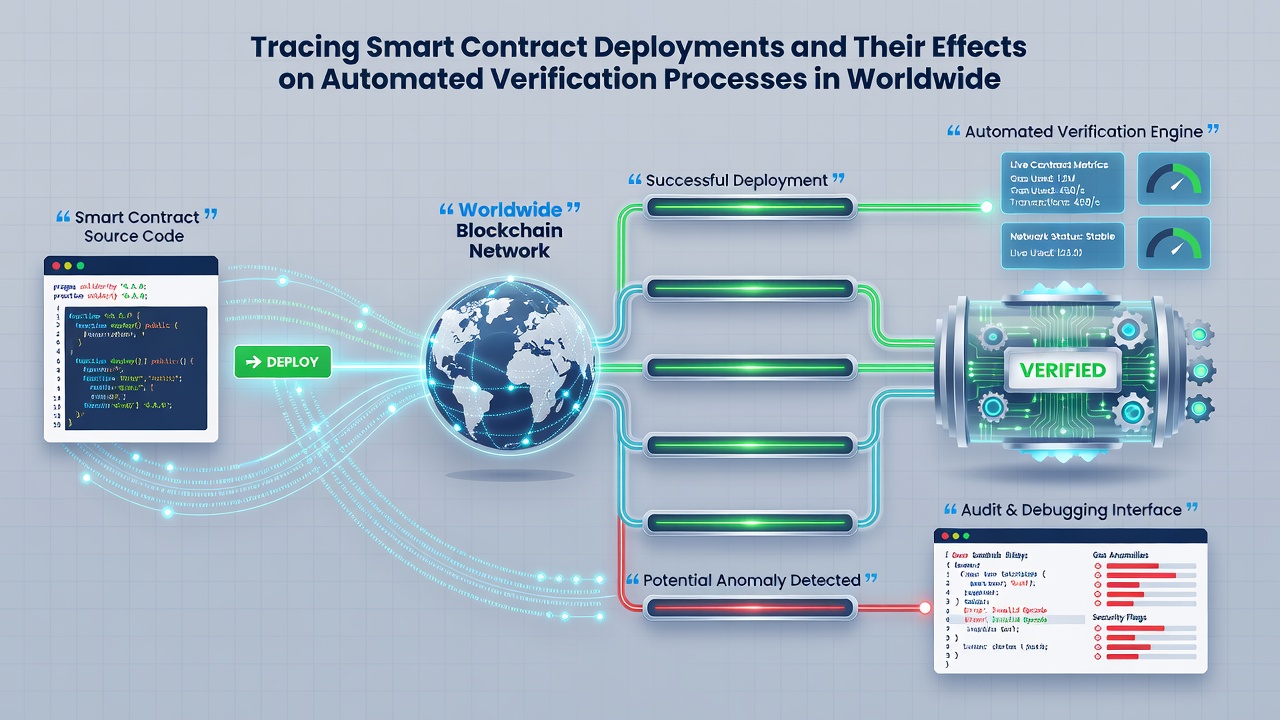
Regulators in multiple regions now request read-only access to these verification dashboards rather than periodic manual reports, and the Nevada Gaming Control Board began accepting on-chain attestations for certain skill-based titles in March 2026. Australian authorities followed with similar guidance two months later, creating a template that smaller markets have begun to reference when updating their own compliance frameworks.
Regional Adoption and Technical Variations
North American operators lean toward permissioned sidechains that still anchor final states to public networks, whereas Asian platforms more frequently deploy directly on public chains to leverage existing liquidity pools. Both approaches produce the same core verification artifact: a cryptographic receipt that proves the contract executed exactly as written. Academic teams at the University of Malta and Singapore Management University have published comparative studies showing that sidechain hybrids reduce gas costs by 34 percent while maintaining equivalent auditability for third-party examiners.
Challenges in Cross-Border Verification
Jurisdictional differences in data retention rules create friction when verification scripts attempt to query historical blocks across regions, yet developers mitigate this by embedding jurisdiction-specific metadata fields at deployment time. These fields allow filters to isolate records relevant to a single regulatory body without exposing unnecessary player information. Observers tracking June 2026 activity noted that contracts containing such metadata fields passed automated compliance checks 2.3 times faster than earlier versions lacking the tags.
Future Trajectories for Verification Infrastructure
Layer-2 scaling solutions continue to absorb a growing share of gaming transactions, and verification tools are adapting by indexing both L1 and L2 events within unified dashboards. Industry reports indicate that 61 percent of new gaming contracts deployed in the first half of 2026 included built-in support for zero-knowledge proofs, allowing operators to demonstrate correct execution without revealing underlying game logic. This capability reduces the attack surface for potential exploits while still satisfying transparency requirements from oversight bodies.
Conclusion
Smart contract deployments have established standardized pathways for automated verification that operate consistently across worldwide digital gaming operations, and the infrastructure continues to mature through incremental improvements in oracle integration, metadata tagging, and proof systems. Regulatory acceptance of on-chain attestations has accelerated in several key markets, which in turn encourages further technical refinement. The resulting ecosystem supplies operators, players, and regulators with shared, tamper-evident records that support faster dispute resolution and more uniform compliance monitoring.